

.svg)
Part One:
Trapped by the Narcissus and Echo Myth
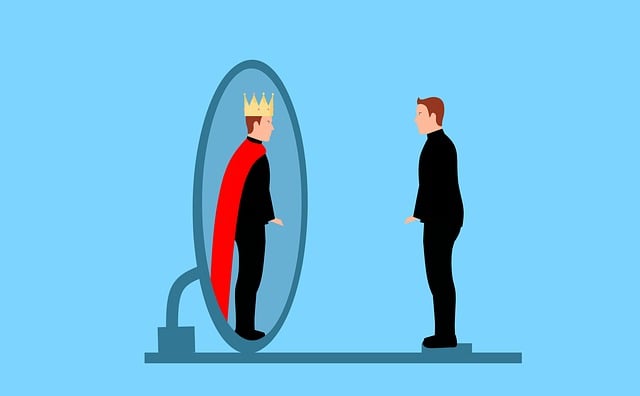
Have you ever dealt with a narcissistic leader, been misled by gossip, or spent so much time perfecting an image or brand that you repress much that you are? And are you concerned about such behavior in those who exercise great power over people like you or others you care about? These are questions that humans have dealt with over millennia. This blog is not about narcissism as a character disorder, because that could only be determined by a psychiatrist when diagnosing an individual patient. Here I’m writing about narcissism in my country, both major political parties, major leaders, and folks like you and me. The myth of Narcissus and Echo can help us understand a pattern of behavior that may well be promoted by much that is in and around us.
The myth: Narcissus was very good looking even as a child. Throughout his life, many, including Echo, fell in love with him, but none pleased him. But when he bent down to get a drink of water in a pool, he fell in love with his own reflection. Entranced by his own superior looks, he began to see everyone else as horribly ugly, thus becoming ever lonelier. He called out to Echo, but all she could do was repeat what he said. He eventually died not just of starvation but also of thirst, as he was unwilling even to turn his head to get a drink, fearing that his image would disappear.
Application today: Having co-authored a book on branding, I see having a powerful brand image as useful in business, but there and in our privates lives it is not wise to prioritize image above authenticity. And those with narcissistic tendencies often feel empty inside. They hold tight to their image and seek constant reinforcement from others who flatter them. Narcissus’s disdain for others can turn into fear and then hatred, as we see in history and today. As I write this, some in positions of power in the United States even threaten those who do not share their rancor. That triggers fight/flight/fawn/freeze responses in others—all ways in which those around them become like Echo. Echo then passes all this on in gossip or conspiracy theories. In both cases, the genuine Self begins to die, creating a desperate need for constant adulation from others.
Our current danger: A sign of the danger in the U.S. begins with the notion of American exceptionalism, meaning that we are so superior and good that we do not have to keep faith with international rules and treaties. Could our country have become narcissistic? True, ours is a particularly extreme version of how empires often implicitly assume their superiority and use the native peoples to do their bidding. Could religions promote narcissistic tendencies? Those that see theirs as the only true faith have often justified harming others by claiming they are following God’s will. Some have believed that God has called them to wipe out those they view as enemies.
With each of our major political parties identifying with being right and good and the other being wrong and bad, those in power disdain those who are not, which becomes even more dangerous when they lose connection with facts and truth. This distortion can quickly lead party members, as with Echo, to just repeat what they are told is right by their party, and/or, like Narcissus, to be obsessed with identifying with their own side’s image and to look down on the other. Of course, narcissistic leadership intensifies the danger, disconnecting us and our culture from reality, which undercuts our reputation in the world. America’s current culture war is so divisive, our democracy is at risk. Like Echo, more of us keep repeating what we are told is right, while, like Narcissus, we remain fixated on identifying with the “correct” side’s image.
In individuals: It is easy to look around and notice examples of the Narcissus/Echo effect in the public, in the workplace, and even in religious spheres, but it is more difficult to see it in ourselves. Humans have herd animal tendencies and want to belong. There’s nothing wrong with that, except when we substitute fitting in for finding ourselves— like Echo, just repeating what our group is saying. And like Narcissus, we can focus on what makes us special and then exaggerate the inferiority of others who lack what we value in ourselves. Could this be true of you or me? Yes, to the degree that we feel superior to others, we could begin to see them through a lens marked “lesser” and thus avoid learning from them, thereby experiencing what I would call “option starvation.”
Our body chemicals can reinforce this pattern. Our hormones offer benefits but also trap us if one or more of them becomes addictive, feeding the Narcissist and Echo within us. Oxytocin reinforces human bonds and intimacy, as well as caring for one another, but in excess can disconnect us from each other. Dopamine reinforces our efforts to achieve goals, which can lead to driven lives. Serotonin reinforces status, which at best helps us want to contribute to the greater good but also bolsters the desire to be special and/or superior. Left to ourselves, living in ways that balance these tendencies would protect us if we were not getting so many cultural messages that we are never enough.
Our capitalist system, which inspires rags to riches success stories, initially provided hope for those emigrating to the United States to gain better lives. But now even some billionaires never feel successful enough, instead becoming addicted to making ever more money. The myth that we live in a meritocracy began as a promise that we could escape from class and caste limitations. Today, it often defines our status as reflecting our worth. Yet, sadly, too many people who are contributing to their families, communities, and workplaces nevertheless are viewed as losers, deplorables, nobodies, etc. and see themselves that way, too. And, like Narcissus, all this may encourage us to fall in love with our image, thus starving our authentic selves. In such cases, any of us may attempt to rise in status by echoing what others are saying and doing.
Perhaps our leaders, whom we have chosen, after all, are mirroring our own tendencies. If so, what can we do? Check out Part Two for some ideas.
More Posts
Related Articles


Narcissus and Echo: The U.S., Our Politics, and You and Me: Part Two
Disney, Jesus, and Shakespeare


